Be among the first to get the news all around you....
Here to serve your need
For Sports, Entertainment, National and International news....... with TheHitDotCom
Modern Times Group (MTG) has launched its first ever advertising funded free-TV channel in Tanzania under the TV1 brand.
The channel is available through Tanzania’s digital terrestrial
network, and reaches up to 30% of the 48 million people in the country.
TV1 is a general entertainment channel with a mix of locally produced
news and entertainment content, as well as international movies and TV
series. The channel is focused on a broad, slightly female skewed,
target audience of 15-49 year olds. TV1 will be MTG’s second African free-TV channel, and follows the
launch of Viasat1 in Ghana in 2008. Viasat1 Ghana has grown rapidly
since launch, and is now the country’s second largest free-TV channel
with a 24% commercial share of viewing in the target audience group. The
Ghanaian operation also reported its first quarterly profit already in
2013.
Four of MTG’s Viasat thematic pay-TV channel brands are also
available on networks in Nigeria, Uganda, Kenya, Rwanda, Tanzania and
Mozambique. MTG’s production company Modern African Productions (‘MAP’)
also creates a wide range of content for a number of African markets,
and will support the launch in Tanzania.
Jørgen Madsen Lindemann, president and CEO of MTG, commented: “We are
proud to launch our second African free-TV channel. We are committed to
further expanding our presence not just in Tanzania but also in other
fast growing African countries and economies. We will bring viewers a
wide range of local and international shows that will provide top
quality entertainment for the whole family.”
Joseph Hundah, executive VP of the Group’s African operations,
commented: “TV1 is our second free-TV channel launch in Africa, and we
have benefitted both from our experience of launching a channel in
Ghana, and from our presence in Tanzania through our pay channels over
the past few years. We have built everything from the ground up to
ensure that we have the best possible local facilities, to provide the
platform for future growth and, most important of all, to ensure that we
deliver the most exciting, relevant and engaging TV experience for our
audience.”
The "Drunk in Love" singer is shown lounging on a glamorous white
chair while wearing a satin robe with a matching bra and underwear.
Queen Bey accessorized her sultry look with a pair of ivory marabou pumps and platinum tousled hair. Gorge!
Secondly, Blue Ivy is standing by and looks like she's about to snap pics of her mama on an iPhone.
The 2-year-old looked like she was picking the perfect filter before posting the image on her Instagram account (ugh, we wish!).
Yoncé shared several other pics on her Tumblr page Wednesday morning,
including a series of her posing in a sweatshirt with the word
"Flawless" written on it (in honor of her hit song, obvs.).
The 32-year-old paired the top with a pair of skinny jeans with leather panels and sky-high ankle boots.
And speaking of flawless, the Grammy-winning songstress also shared a makeup-free selfie late last week.
Bey looked like she was still in bed in the two pictures, which flaunted her perfect complexion and bedhead.
Ancient
grains (also called heritage grains) include crops such as amaranth,
quinoa, millet, chia seeds, kamut, spelt and buckwheat, which have been
around, unchanged, for millennia.
Weighing only 42kg
“Angie’s
always been a fan of healthy seeds and grains, but lately she’s taken
it to a whole new level,” an insider told The Enquirer.
“She’s
into eating products made with ‘ancient grains’ and raves about their
health benefits. She claims they provide her with nutrients she can’t
find anywhere else, plus shinier skin. But the problem is that she’s not
balancing her diet with fruits, meats or vegetables.”
Angelina's
weight has reportedly plummeted to only 93 pounds (42kg) and she is
said to have collapsed of exhaustion on the set of Unbroken, a new movie she directed Down Under. She is only 1.69m, meaning her Body Mass Index (BMI) is 14.7, which is severely underweight.
Ancient grains and seeds are very healthy. Since they are closer to their original roots than grains such as wheat
and rice (which have been bred selectively over thousands of years)
their nutritional value and taste have been retained much better.
However,
eating only a few grains and seeds every day, as Angelina Jolie has
reportedly been doing, is unhealthy, as her daily diet is unbalanced.
For optimal health, the body needs a balanced diet which also includes
fruit, vegetables and lean protein.
Spice of your daily meals by
trying out some of the ancient grains listed below, but make sure that
your diet still includes all five food groups: fruit, vegetables,
grains, protein foods and dairy.
Spelt is a tasty whole
grain with a nutty flavour and often called the distant cousin of wheat
as it contains a wider range of nutrients, is high in fibre and can be
used in baking.
Amaranth is a "pseudo-grain" as it is seen
as both a herb and vegetable. Is is a very nutritious food high in
protein and fibre and contains no gluten - making it perfect for people
with gluten intolerance.
Chia seeds are rich in
antioxidants and minerals. They are also the highest plant source of
omega-3 fatty acids and contain more fibre than flax seeds or nuts.
Quinoa
is actually a seed, not a grain and completely gluten free. It is
often described as a superfood as it is a complete protein, meaning it
contains all nine essential amino acids. Quinoa is cooked similarly to
rice.
The world's oldest-known living cancer dates back 11,000 years, according to UK scientists.
It arose in a single dog and has survived in canines ever since, with the cancer cells passing between animals when they mate.
A team led by the Wellcome Trust Sanger Institute near Cambridge decoded the DNA of the cancer.
It revealed the "genetic identikit" of an ancient husky-like dog, which first developed the disease.
The animal was of a medium size with a short, straight coat that was coloured grey-brown or black.
"We do not know why this particular individual gave rise to a
transmissible cancer," said lead researcher Dr Elizabeth Murchison.
"But it is fascinating to look back in time and reconstruct the
identity of this ancient dog, whose genome is still alive today in the
cells of the cancer that it spawned."
The cancer studied is extremely rare - one of only two known types of
the disease, both in animals, that is sexually transmissible. Known as
dog-transmissible cancer, it causes genital tumours.
By decoding the genome of the cancer, and looking at a type of
mutation that acts like a "molecular clock", researchers were able to
pinpoint its origin to 11,000 years ago.
Remarkably, the cancer has survived, despite accumulating millions of genetic changes.
Rather than dying out with its first host, the cancer spread by "jumping into other dogs", Dr Murchison added.
The research, published in the journal Science, shows the cancer
existed in an isolated population of dogs for much of its history.
Then it spread around the world in the last 500 years, perhaps carried by dogs accompanying explorers on sea voyages.
Apart from this one, the only other known transmissible cancer is facial cancer in Tasmanian devils, spread by biting.
"The genome of the transmissible dog cancer will help us to
understand the processes that allow cancers to become transmissible,"
said Prof Sir Mike Stratton, Director of the Sanger Institute.
Most cancers arise when a single cell in the body gains mutations that cause it to divide out of control.
Cancer cells often spread to different parts of the body in a process
known as metastasis, but it is very rare for cancer cells to leave the
bodies of their original hosts and spread to other individuals.
The New York Times
has reported that Apple is testing alternative ways to power its much
awaited iWatch, in a bid to overcome the constraints of normal battery
life.
One method Apple is rumoured to be exploring is charging the battery
wirelessly by the means of magnetic induction. This would be similar to
the technology that Nokia smartphones currently employ, charging via a
‘plate’ that creates a magnetic field via an electrical current.
Apple has a patent dating back to 2009,
which describes how a device could be charged through movement. A tiny
charging station that powers the smartwatch, could be triggered by the
wearer swinging their arm.
Or it’s possible that the company will choose to go down the
solar-power route, adding a solar-charging layer to the curved glass
display that it is rumoured to have. It is a viable option as Apple
obained a patent for a flexible battery that would “easily couple with a
flexible solar panel layer.”
Apple have rumoured to have been having problems in the development
of the iWatch, delaying its release. Hopefully once the best power
supply has been selected, that will another job ticked off the to-do
list for the company.
It’s
a common misconception that the President of the United States can do
whatever he wants to do. One would be easily forgiven for thinking that
the President could have whatever kind of technology he wanted in his
hands at any moment of the day or night. He’s the President, after all.
Who’s going to tell him no? Well, apparently the White House security
detail has been refusing to allow President Obama to have a very popular piece of technology:
the iPhone. In fact, President Obama is still stuck with his Blackberry
(he may be the only person who still uses a Blackberry) and says his
staff may have to pry it out of his hands before he will give it up. So,
if you would one day like to be President, but enjoy using an iPhone,
you’d better give one of those things up right now. Even The President Can’t Always Get What He Wants
Here’s an ironic twist to this story – President Obama can use an
iPad, but not an iPhone. And, to rub it in even more, President Obama’s
daughters are allowed to have and use their own iPhones. Maybe he can
get a voice calling app on the iPad and settle for the next best thing.
So why can’t the President of the United States use Apple’s iPhone?
It all comes down to potential security problems with the phone that
must not exist with the iPad. One of those potential problems could be
individuals locating the President based off of location data sent by
the iPhone.
Since the NSA is acutely aware of how to spy on people around the
world through their phones, it is likely that there is some merit to all
of the security concerns with President Obama using an iPhone. Perhaps
Apple should address these concerns as well and create a phone that
doesn’t report location data quite so easily.
So, no – the President of the United States can’t just do whatever he
wants whenever he wants to do it. I wonder if his security team would
let him use an Android phone in the future?
The New York Times
has reported that Apple is testing alternative ways to power its much
awaited iWatch, in a bid to overcome the constraints of normal battery
life.
One method Apple is rumoured to be exploring is charging the battery
wirelessly by the means of magnetic induction. This would be similar to
the technology that Nokia smartphones currently employ, charging via a
‘plate’ that creates a magnetic field via an electrical current.
Apple has a patent dating back to 2009,
which describes how a device could be charged through movement. A tiny
charging station that powers the smartwatch, could be triggered by the
wearer swinging their arm.
Or it’s possible that the company will choose to go down the
solar-power route, adding a solar-charging layer to the curved glass
display that it is rumoured to have. It is a viable option as Apple
obained a patent for a flexible battery that would “easily couple with a
flexible solar panel layer.”
Apple have rumoured to have been having problems in the development
of the iWatch, delaying its release. Hopefully once the best power
supply has been selected, that will another job ticked off the to-do
list for the company.
it seems that Google wants a finger in every technology pie. It has
made its intentions clear where robots are concerned and now, according
to a report from Bloomberg, the tech giant is also considering designing its own server processors.
Using ARM technologgy, Google hope to better manage the interface
between its hardware and software, claims the report. It also states
that this potential move by Google, could prove to be a threat to
Intel’s current market dominaton, especially seeing as Google is Intel’s
fifth largest customer. Google hasn’t confirmed or denied
anything yet but has said: “We are actively engaged in designing the
world’s best infrastructure. This includes both hardware design (at all
levels) and software design.”
ARM-based chips are used mainly in the mobile sector but AMD has
announced that it does plan to implement the ARM architecture within the
server market.
Google has shown that it does have some interest in the chip market.
In August it joined a group which licenses technology used in data
centers, including chips for servers.
It will be interesting to see how this one develops and whether Google will continue to pursue this.
As
we all know, Google always has some big plan or other. The latest news
suggests that Google is planning to have Android installed in cars,
starting with Audi.
According to The Wall Street Journal, the company will announce a joint venture with Audi next week at CES 2014.
Sources say that Android will be used to power in-car entertainment
systems for Audi, which will run on hardware built directly into the
car, rather than on a smartphone.
NVIDIA is also in on the plans, with navigation also being included
in the system, as well as entertainment and communication functions.
Audi recently annouced that LTE would be available with select models
and it looks as though Google has got in before anyone else. EE Times
suggested that Google had something up its’ sleeve as far as automobiles
were concerned, especially because Apple too had announced its own
initiative to put iOS in cars, with the help of BMW and Daimler.
There have been no product demonstrations yet but watch this space.
When
Google Glass was first announced, we all got excited about the idea.
Well, perhaps that is too much of a sweeping statement. After all, there
are a lot of people who are not that pleased with the idea. We’ve even
heard about patrons being banned because of Google Glass;
and while there are individuals who have had the chance to play with
this particular piece of wearable tech, the general public still has no
access to Google Glass. Eight months since the gadget was made available
to some people, we’re already looking at whether or not Google Glass
will get a break this year.
Having had no personal experience with the device, my opinion is
based on secondhand information, and when it comes to that, why not
allude to what Robert Scoble has put on record? Yesterday, he wrote a post on Google+
which sums up his opinion neatly: Google Glass is doomed. Here are the
highlights of why he thinks this is going to be the case – at least for
this year.
Expectations are too high.
These are too hard to buy and acquire. They need to be custom fitted
and, because they have a new user interface, users need a bit of
training on how to use them.
Not enough apps.
The current UI can’t handle lots of apps.
Battery life.
Photo workflow sucks.
Facebook is our main addiction and I can’t do it in Glass.
No contextual filtering.
Developers are being held back because there isn’t any distribution system for apps or Glass experiences.
The Gruber problem. He just doesn’t like the idea of Glass, even if Apple were to bring out one.
I think it all boils down to the first point: expectations. The hype
surrounding Glass was high from the get go, and while it may have died
down, the chances are that expectations from the device will still be
sky high when it finally hits the shelves. All the other points stem
from expectations; more so, we have to remember that this is a very
early stage for Google Glass and other wearable devices. Translation:
more features will come at some point. Probably not this year or even
the next.
So yeah, we probably won’t be seeing Google Glass the way we see
iPads (and other tablets) this year, but that’s not to say that’s going
to stay the same in 5 years or so.
What do you think, is Google Glass doomed (this year or even beyond)?
The
Google Glass device has, up until now, only been made available to a
selected few individuals. All that is about to change, as Google has
just opened up its Glass Explorers programme to subscribers of its All
Access music streaming service.
The worlds biggest search engine company has recently sent out emails
to subscribers of the service informing them that they are now eligible
to buy a Google Glass Explorers device. Google reportedly sent out the emails this Tuesday, according to Gizmodo.
The Google Glass Explorers device is the company’s testing programme
for the massively anticipated wearable technology device. Those people
who are wanting to buy the device will still need to come up with the
$1,500 which Google Glass costs, which the first wave of users had to
pay last year, when the device first became available.
Owning Google Glass is an exclusive club so far, as only certain
developers, celebrities and contest winners have been allowed to
purchase the device so far. The company did put up a waiting list for
the general public last year and the All Access subscribers are now part
of that exclusive group. In November last year, Google added All Access
support for the headset, so it was only a matter of time before it
became available to them. The device has won awards for innovation in 201
If
you have been following Google recently you will have noticed how the
company seems to snapping up every robotics company and intelligence
system in sight. Just in the last few months, Google has acquired Nest, the company responsible for making the smart thermostat, as well as Boston Dynamics, the robotics company. Even as recent as last week, Google splurged $400 million on the artificial intelligence specialists DeepMind Technologies.
So what is Google’s strategy in all of this? When you look at the
number of acquisitions it becomes clear that the company is exploiting
an inefficiency in the market so that it can become the leader in the
field of intelligent computing. Google obviously thinks that in the
future any intelligent or automation system will be served by robots. In
acquiring all the related companies, Google becomes the big player
before any of its competitors even get a look in. It’s not just the
companies that Google is snapping up but also all the expertise of the
talented engineers, that will no doubt be a big bonus going forward.
Imagine how difficult it must be to find talented engineers and
researchers in the field of robotics and artificial intelligence. No
wonder Google has targeted this area and was willing to spend so much in
acquiring the creme de la creme. All the resources and talent will be
at Google’s fingertips, ready for when it wants to progress with its
artificial intelligence systems.
At the moment the company is working on a type of ‘personal assistant’
through the use of Google Now, allowing information to be delivered to
users via an automated, intellectual context. There is still a way to go
in developing this system but it becomes clear how artificial
intelligence will play a big role in its further development.
So where do all the robots fit in to Google’s world domination plan?
It could be that robots will be employed in the data centres or even
play a role in Google’s driverless car plans. However, it could be that
they are applied to something completely new. The technology is
applicable in everything from analyzing financial data to manufacturing.
In whatever way robots are applied, the fact remains that Google has
the best brains behind this venture. Ray Kurzweil is considered to be
the world’s best expert on artificial intelligence, while Andy Rubin,
the man behind the Android platform, is now heading up Google’s
robotics department. That’s only mentioning a couple of the many workers
Google has at its disposal.
It is a risky strategy on Google’s part to be putting a lot of eggs
in one basket though. If it is unable to successfully create the next
generation of artificial intelligence, then we could see this field of
technology come to a stand still, with no progress being made.
Concerns Over Security And Ethics
There are security and ethical concerns too when it comes to
artificial intelligence. Everyone’s first thought tends to be of robots
taking over the world and destroying humans, like in Terminator. But it
seems that Google is trying to allay these concerns, as it has agreed to
create an ethics board which will monitor the use of the technology
acquired through DeepMind.
Of course, although Google appear to have the monopoly over
artificial intelligence, it’s important to remember that companies like
Microsoft Research, Amazon, DARPA,
Qualcomm and Intel are all involved in working on various aspects of
artificial intelligence. Any one of these could pose a threat to
Google’s strategy, as long as they keep on their toes.
Currently, Samsung and Apple are involved in multiple court conflicts over handset technology. Both Google
and Samsung have contracted a universal patent cross-licensing
agreement geared towards limiting “the potential for litigation” and
improving modernisation.
This deal will cover “a broad range of technologies and business
areas” which will apply to not only already existing patents but any
filed over the next ten years as well. Samsung and Google already have a
close-knit relationship, as Samsung uses Google’s operating system, Android, for its mobile devices.
Samsung has said that the deal is “highly significant for the
technology industry” and has also announced that this deal significantly
reduces the possibility that Google and Samsung will have to face each
in court regarding intellectual property rights. It will also fortify
their position against opponents, such as Apple, who has filed numerous
proceedings worth billions of dollars for suspected patent violations.
“Samsung and Google are showing the rest of the industry that there
is more to gain from co-operating than engaging in unnecessary patent
disputes,” stated head of Samsung’s Intellectual Property Centre,
Seungho Ahn.
Samsung is the largest smartphone creator and faces lawsuits from
large global companies, like Apple in the US, as well as countries, like
South Korea, over mobile technology patents. Apple asserts that
Samsung has taken liberties with their best-selling Galaxy smartphones
and copied the design from the iPhone. This patent dispute has
continued on for a few years now and both chief executives of Apple and
Samsung are planning to meet for conciliation in February.
Another high-profile case involving patent disputes is the Rockstar
consortium – which includes Apple, Microsoft and Sony. They have sued
Google as well as six other smartphone manufacturers that use the
Android OS. Eight lawsuits were filed in the US involving Google’s
mobile technologies and user-interface design. Google’s Moterola
Mobility Unit, which owns a big patent collection, is also involved in a
disagreement with Apple. In order to counter this, technology Goliaths
have looked to raise their patent numbers, as well as sign contracts
like the one announced by Google and Samsung.
Analysts say that these moves enforce strength by numbers. “The more
patents you have the more protected you are from litigation,” says
analyst Andrew Milroy who consults at Frost & Sullivan,
“I’m not sure if the agreement means Samsung can use Google patents and
vice-versa. But if they are collaborating it protects them from
litigation, since the pair of them together is a stronger unit.”
[Image via phonearena]
SOURCE: http://www.bbc.co.uk/news/business-25908364
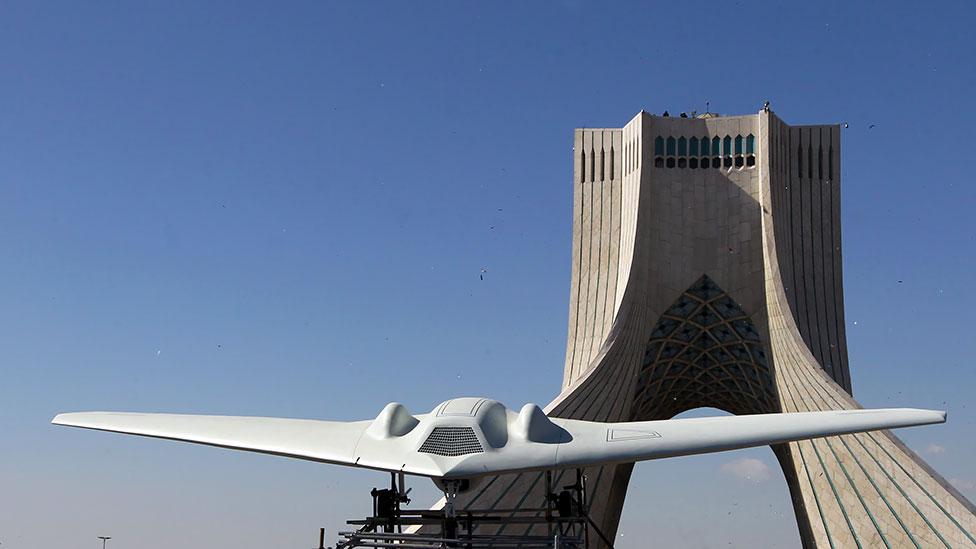
If you were watching Iranian state TV in early December 2011, you
would have seen an unusual flying object paraded in front of viewers.
Windowless, squat, with a pointed nose, its two wings made it the shape
of a manta ray. The trophy on show was an RQ-170 Sentinel stealth drone,
a key weapon in the intelligence gathering arsenal of the US Central
Intelligence Agency (CIA). Standing in a hangar on a military airfield,
the drone was seemingly undamaged. Indeed, Iranian officials insisted
that it had not been shot down; rather, they claimed an unusual coup: to
have hacked the drone while it was flying near Iran’s border over
Afghanistan and forced it to land.
Outside Iran, many snorted in
disbelief at hearing such claims. Todd Humphreys, assistant professor of
aerospace engineering at the University of Texas in Austin, US, was one
of the sceptics. Soon, though, he would prove himself wrong.
So,
how easy is it to hack a drone? Along with the military, could police
and private citizens also lose control of their aircraft? And if so,
what might a hacker do with a stolen drone?
One way to hack a
drone involves messing with the system it uses to navigate. US military
drones use encrypted frequencies of the Global Positioning System (GPS),
and this was the RQ-170’s Achilles heel, said the Iranians. They first
jammed its communications links, which disconnected it from ground
controllers and made it switch to autopilot; it also interrupted the
secure data flow from the GPS satellites. The drone was forced to search
for unencrypted GPS frequencies normally used by commercial aircraft.
At this point, the Iranians said, they used a technique called
“spoofing” – sending the plane wrong GPS coordinates, tricking it into
believing that it was near its home base in Afghanistan. And so it
landed on Iranian territory, directly into the welcoming arms of its
kidnappers.
The US rejected the hacking scenario, insisting that
its flying robot simply had malfunctioned. Military drones usually have a
back-up system to guide them home automatically if contact with
operators is lost. But that clearly didn’t work.
Military reconnaissance drones carry camera footage that enemies covet. (Johannes Eisele/AFP/Getty Images)
The more Humphreys thought about the incident, the more he
felt that such an attack might work, at least in theory. Together with
students at his university’s Radionavigation Lab,
which he directs, he invited the US Department of Homeland Security
(DHS) to watch how his team could spoof a civilian drone mid-air.
Using
equipment costing less than $2,000, Humphreys mimicked the unencrypted
signals sent to the GPS receiver on board a small university-owned
drone. With DHS officials watching, he managed to fool the drone in a
matter of minutes to follow his commands. “I first dismissed the
Iranians’ claims as extremely unlikely, but have since revised my
estimate to ‘remotely plausible’,” he says. Confused drone
Jamming
GPS satellite signals “so the drone's sense of its own location begins
to drift away from the truth” is quite doable for both military and
commercial drones, he says, because these signals are so weak. “The US
military is scrambling right now to reduce their drones' susceptibility
to GPS jamming, but it's going to take some time before they've got a
satisfactory fix.”
There are other vulnerabilities, too.
Intercepting data links from the drone, such as knowing precisely what
the plane is looking at, is also easy to do if the feeds are not
encrypted. In 2008, Iraqi militants intercepted unencrypted video feeds
from unmanned US spy planes. And in 2012, drones at Creech Air Force
Base in Nevada were reportedly infected with malware after an operator
apparently had used a drone’s computer to play “Mafia Wars” – and in the
process installed a virus on the PC.
A military drone hacked by
criminals is obviously a dangerous scenario. But what if hackers were to
gain control of civilian flying robots? Drones are already being
exploited for search and rescue organisations, police authorities for
surveillance, or for crop or wildlife monitoring, for example, and they
may soon be joined by postal services and online retailers.
A clever hack could make Parrot AR drones target each other. (Wikimedia)
Independent IT security analyst Samy Kamkar
showed that taking control of a civilian drone was possible in December
2013. He equipped a Parrot AR Drone 2.0 with a tiny Raspberry Pi
computer, a battery and two wireless transmitters. The microcomputer ran
a simple piece of software, which directed the drone to search for the
wi-fi signals used to control nearby Parrot drones. Once his drone had
found a victim, the program used the wireless transmitters to sever the
target drone’s link to its owner and took control. According to Kamkar, a
handheld computer on the ground can do the trick too.
Humphreys
calls Kamkar’s work “a clever hack” and predicts that “it won't be the
last one against commercial drones; hackers will find flaws and exploit
them.”
David Mascarenas, who works for the National Security
Education Center at Los Alamos National Labs, agrees. As drones are
nothing but flying computers, he says they “have the potential to
exhibit never before seen security flaws that couple both cyber and
physical security concerns.”
Yet what would be the motivation for a hacker to take control of a civilian drone?
“The reason to hack a drone would be like any other reason people hack,” says Peter Singer,
director of the Center for 21st Century Security and Intelligence at
Brookings Institution, a think-tank based in Washington DC. “It might be
to cause an act of terror, an act of mischief, to carry out some kind
of crime, or the “white hat” type, to show that it can be done in order
to warn others of the vulnerabilities.”
DHL delivery drones carry cargo that hackers may want to steal (Andreas Rentz/Getty Images)
Delivery drones could be hacked to steal their cargo, the
expensive machine itself, or even to encourage black market activities.
“If a drone can deliver a book, it can also be used to deliver
narcotics” or sneak contraband into a prison, says Mascarenas. Indeed a
drone has already been used for smuggling cigarettes into a prison yard in Georgia, US.
Another
example might be corporate espionage. A drone that normally operates
within a factory could be redirected and tagged with a tiny broadcasting
camera, allowing a hacker to spy on sensitive commercial information.
Then there may simply be people who don’t want drones spying on them. One town in Colorado has already proposed drone “hunting licences”
that would allow people to shoot down drones. While Humphreys says the
idea is farcical, the anti-surveillance sentiment behind it is real. “If
I saw an unfamiliar drone snooping around my back yard, you can bet I'd
be sorely tempted to jam its GPS receiver to shoo it away – or bring it
down,” he says. “GPS jammers can be purchased for less than $50 online
and they're quite effective.”
So can the threat be prevented? At
the Los Alamos National Laboratory Engineering Institute, Mascarenas and
colleagues are testing software that would make drones unpredictable –
for example by taking random paths while still achieving their goals –
to reduce the possibility of ambush.
Yet such methods will likely
prove to be the start of an arms race between hackers and the security
professionals who wish to stop them. “The bottom line is that a drone is
a flying computer. And computers can be hacked,” says Singer.
We love horror; we love the edge-of-our-seats,
don’t-watch-it-with-the-lights-off, scare-the-pants-off-us type of
horror. So far, AMC’s The Walking Dead has been our go-to for scares on television, but Syfy’s Helix has tossed their show into the mix. Though showrunner for Helix, Steven Maeda, hates any comparison between the two series, they do fall into the same category. Helix is a dramatic sci-fi thriller series, similar to the zombie hit, but that’s where the comparisons end.
Helix revolves around a group of doctors from the
Centers for Disease Control who travel to a research center in the
arctic in order to stop an outbreak of an unknown virus. Helix
combines the best aspects of a thriller — crazed infected people going
on murderous rampages, crawling through the air ducts, and leaping out
from the shadows — with all the great staples of drama — conspiracies,
lies, and a love triangle (because why not?). Plus the unknown virus has
a serious ick factor: in the first episode it turns two scientists into
bags full of black goo (cue the dry heaving).
It’s hard not to see the similarities between The Walking Dead and Helix. They both deal with a virus that infects and changes people. However, while The Walking Dead deals with the aftermath of a virus and what it takes to survive that kind of destruction, Helix focuses on the outbreak as well as the struggle to contain and cure the virus. That being said, fans of The Walking Dead are sure to love Helix as well, and vice versa. These are the two best horror dramas TV has to offer at the moment.
Do We Need a Female Superhero Before We Can Have a Female Villain?
Marvel
With so many superhero movies and reboots to keep track of, it's no surprise that Fox's planned Fantastic Fourreboot
has gotten somewhat lost in the shuffle. The project has been in the
works for some time, although it was rumored to have originally been
concived as a starring vehicle for Michael B. Jordan. The Fruitvale Stationactor
has been all but confirmed as the new Johnny Storm, but although the
studio has been looking at many different actors to fill out the rest of
the lineup, nobody else has remained a constant. Most recently,
Jordan's That Awkward Momentco-star Miles Teller was rumored to be in the running for Reed Richards, with British actor Christian Cooke testing for the role of Ben Grimm, and Emmy Rossum and Kate Mara
becoming the latest actress to test for Sue Storm. However, the most
interesting news that the studio has revealed in these casting reports
is that Dr. Doom will definitely be the film's villain, but
although they are hoping to cast a big name in the role, the team is
interested in looking at both male and female actors for the part — meaning that Fantastic Four could possibly have a female super villain.
Of course, since these are still only early reports, we can't know
for sure how likely a female Dr. Doom is, but the news is still exciting
nonetheless. Good female roles have been notoriously hard to find in
superhero films, and all of the latest reboots and sequels have left
many comic book fans desperate to see a female hero on the big screen. A
female villain is not quite as significant, but it would still be a
major step forward for superhero films.
There are many popular female villains in comic books and video
games, but these villains tend to be smaller side villains who either
assist the big bad with their plans, or are dispatched with early on in
the film. Both Poison Ivy and Catwoman have been featured on the big
screen, but neither of them were given the same amount of screentime or
story attention as the main villains of those films were (unless you
count Halle Berry's Catwoman movie, which you shouldn't). And
although Harley Quinn has a massive fan following, she's more of a
sidekick for the Joker than anything else. Dr. Doom, on the other hand,
is a major villain, one whose backstory and motivations have been given a
great deal of attention and screentime, and he's always been the
Fantastic Four's primary adversary. Casting a woman in this kind of role
would mean that she would get significantly more attention, as well as
guaranteeing her a spot in multiple Fantastic Four films.
Since this films would be a reboot and origin story, the story would
have to dedicate a significant part of the plot to establishing Dr.
Doom's backstory and explaining her motivations, which would help to
create a character that is three-dimensional and sympathetic. It's
possible, then, that Dr. Doom could become a popular character amongst
fans who can empathize with her or who find the character to be
complicated and interesting, like the Marvel fans who have rallied
behind Loki as their favorite character. While that doesn't
necessarily mean that Dr. Doom would then get her own film, it might
help encourage studios and filmmakers who are worried that a female
superhero wouldn't be well received. After all, if a female villain
could earn a huge following, who's to say that a female hero couldn't
earn a bigger one?
Of course, changing Dr. Doom to a woman would cause a great deal of
backlash before there would be any opportunity for her to build a
following. Many comic book fans are resistant towards seeing their
favorite characters changed for the big screen, and since even small
tweaks (like upping Batman's age for Ben Affleck to play him, or the
possibility of Lex Luthor not being bald) tend to result in a great del
of outrage, the reaction towards turning Dr. Doom into a female
character would likely be even bigger. Fantastic Four has
already had to endure controversy over the decision to cast Jordan as
Johnny Storm, since in the comics, the character is white, which might
make the team behind the film even more hesitant to take a chance on an
unusual casting choice. Not to mention, by and large, the reaction to
female characters from male comic book fans tends to be more negative
than positive — even fan favorite Black Widow is often attacked whenever
a new Avengers film is released.
However, even if fans could get past the shock of a female Dr. Doom,
making a woman a super villain seems like the easy way to give females
more prominent roles in franchises. Generally, there is a type of actor
who plays villains, and a type who play heroes, and there is very little
overlap between those two groups. In much the same way,
portraying women as villains could keep both studios and audiences as
viewing women as heroes. The protagonist of a film is the character
through which the audience views the story, and since superhero films
are generally targeted at a male audience, studios prefer to keep the
protagonist a man, buying into the impression that the audience can
better identify with a male, and therefore will come see the film and
its sequels. They believe that men will have a harder time identifying
with female protagonists, which means that studios are reluctant to
mount a female superhero film, since they are worried that a
male audience will have more trouble connecting with the character and
the film, and therefore enjoy it less. However, studios might feel it's
easier for men to identify women as villains than as heroes
— particularly since a great deal of pop culture stereotypes women into
"nagging wife" or "femme fatale" characters — and so it's an easy way
for them to make progress with female characters without
jeopardizing their target demographic.
All of which means that just because female character may start playing a bigger role in Fantastic Four or
other superhero franchises, it doesn't mean that a female superhero
film will hit theaters any sooner. It's easy to make women the villain,
because it's easier for audiences to accept that, and therefore easier
for studios to guarantee a return. But a female-fronted superhero film
is a risk, and since studios can't guarantee that it will be a success,
it's not a risk they're willing to take. And if audiences get
comfortable seeing women as villains, it makes it even more difficult to
put a female hero film in motion, because it makes it even harder for
audiences to picture a female superhero film.
We would love a female Dr. Doom, or any female super villain, but in
the end, it's not likely to help get that female superhero film made. In
fact it could end up doing more harm than good. But that doesn't mean
that fans should stop pressuring filmmakers and studios to make them,
because we shouldn't be forced to just accept the way things currently
are. And then, once we finally get that Wonder Woman or Captain Marvel
or even a Black Widow or Scarlet Witch solo film, we can add in female
villains, from Harley Quinn and Poison Ivy to a female Dr. Doom, and
have films that feature both good and bad women, and female characters
that are just as complex, interesting, and worth rooting for or against
as the current crop of male superheroes and villains are.
A Guide to All of the New Characters in 'The Avengers: Age of Ultron'
Columbia Pictures via Everett Collection The Avengers: Age of Ultron is adding someone new to their lineup, and it might be someone we already know and love. According to The Daily Mail, the film will be adding The Vision to their already massive cast, and are reportedly looking at British actor Paul Bettany
to play the role — yes, the same Paul Bettany who currently provides
the voice for everyone's favorite artificially intelligent butler and
personal assistant JARVIS. The actor was apparently spotted recently
with Jeremy Renner on the set of the film, and that he appeared to be
participating in some costuming and make up tests for the part.
It seems like every time we turn around, there's a new character being added to Age of Ultron,
and with so many other superhero franchises also in the middle of
casting and filming, it can be difficult keeping everyone and their
powers straight. To help you out, we've created a handy rundown of all
of the new heroes and villains who will be in the next Avengers film, in order of how excited we are to see them on the big screen. Unspecified Villain Played By:Kim Soo-hyun What We Know:
Honestly? Not much. Kim, who is a Korean actress, was recently cast in
an "villain role," which means that her character will either play a
supporting role to one of or both of the film's two main villains, or
she will be revealed to be a significant character somewhere down the
line. How Excited We Are: Well, that depends on who she's playing, doesn't it? The Vision Played By: Paul Bettany (Allegedly) What We Know:
Vision is a robot created by Ultron as a way to enact revenge against
his own creator. Though Vision starts off as a bad guy, he eventually
becomes good and joins the Avengers, and even falls in love with and
marries Scarlet Witch. His powers include flight, phasing, the ability
to project solar energy, and regeneration, which is sure to make things
complicated for the Avengers. There's been no word yet on whether this
version of Vision will be tied to JARVIS in any way, but many people are
theorizing that Ultron may corrupt JARVIS and turn him into Vision. How Excited We Are: We'd prefer if he made a Wimbledon 2, but we'll take it. Quicksilver Played By:Aaron Taylor-Johnson What We Know:
Quicksilver/Pietro Maximoff is the twin brother of Wanda/Scarlet Witch,
and is also a mutant and a former member of the Brotherhood of Evil
Mutants. He can move and think at superhuman speeds, a trait which
Taylor-Johnson revealed causes him to become easily bored and irritable.
He's incredibly protective of his sister, likely due to the fact that
they were abandoned as children, and have spent most of their lives
running away and protecting themselves from people who wanted to harm
them. Quicksilver will also appear in the upcoming X-Men: Days of Future Past, although he will be played by Evan Peters, and they characters will not move between the two universes. How Excited We Are: Well, it's got to turn out better than the other Quicksilver's Empire cover, right? Scarlet Witch Played By:Elizabeth Olsen What We Know: Wanda Maximoff, a.k.a. Scarlet Witch will be joining the Avengers lineup in Age of Ultron.
She originally appeared in the X-Men comics along with her twin
brother, Pietro Maximoff/Quicksilver as part of the Brotherhood of Evil
Mutants, but she was later recruited by Iron Man to join the Avengers.
She's a mutant, and her powers come from her ability to perform "hexes,"
and telekinesis, which allow her to move or control objects as well as
causing bad things to happen to her opponents. Olsen also revealed that
her character can "connect with the dead and people from the past, the
future, other universes," so we're excited to see how that ability comes
into play in Age of Ultron. Scarlet Witch and Vision fall in love in the comics, so we're likely to see some sparks fly onscreen as well. How Excited We Are: We're always up for more female superheroes. Always. Baron Wolfgang Von Strucker Played By:Thomas Kretschmann What We Know:
Strucker is a former Nazi officer who founds HYDRA, is the mortal enemy
of S.H.I.E.L.D., and has spent most of his life attempting to take over
the world through genocide. He is incredibly intelligent and strong,
and is excellent at hand-to-hand combat, as well as having an aptitude
for military strategy and disguise. Strucker has been thought to be
killed many times, although he has survived or regenerated each time,
and although it hasn't been revealed which powers he will have in Age of Ultron,
in some comics, he is able to kill his opponents instantly by releasing
the Death Spore from his body. He also sues his HYDRA resources to
develop serums that give him additional powers and prevent him from
aging, so that he can stay eternally youthful and torture Nick Fury for
all of eternity. How Excited We Are: He's cool, but we've already seen one Super Nazi, and we're more interested in the maniacal AI. Falcon Played By:Anthony Mackie What We Know: Though it hasn't yet been confirmed whether or not Samuel Wilson/Falcon will appear in Age of Ultron, but since we know that it will deal directly with the events of Captain America: The Winter Soldier,
it's likely that he will pop up in some way. Although his backstory
differs somewhat in the comcis, in the film, Falcon works as a tactical
leader for S.HI.E.L.D. and bonds with Captain America over their shared
military experience. He is able to fly using a pair of mechanical wings,
and in the comics he also has the ability to connect with birds, see
through their eyes and communicate with them. Falcon has been Captain
America's sidekick since the 1970s, and joined the Avengers shortly
afterwards, which means it's only a matter of time before we see him
line up with the rest of the team. How Excited We Are: Finally, Mackie will be in a film worth seeing. Sorry dude, we love you, but even you couldn't make Runner, Runner bearable. Ultron Played By:James Spader What We Know:
Ultron is an artificial intelligence with an unfortunate god complex
who is hell-bent on getting revenge on his creator and taking over the
world. He's a long-term nemesis for the Avengers, having first appeared
in the comics in the 1940s, so even though he's the main villain of this
film, that doesn't necessarily mean we won't see him in future films.
Ultron will be rendered on-screen through CGI, though he will be based
on the motion-capture work that Spader will be doing. His range of
powers includes superhuman strength, speed, and stamina, flight, and the
ability to shoot rays of energy from his hands that renders opponents
unconscious; however, Joss Whedon has revealed that not all of his
powers will be featured in Age of Ultron. How Excited We Are: He's the big bad of the film and he's voiced by
At the time of his tragic November death, Fast & Furious actor Paul Walker had amassed an impressive
$25 million fortune. And this week, TMZ confirms he left it all to one woman: his beloved 15-year-old daughter, Meadow.
Still, according to new reports, it won't come to her without some legal wrangling.
While
Walker named his father, Paul Walker III, the executor of his will, his
father is currently petitioning to have Walker's mom, Cheryl, named
guardian of the funds—and legal guardian of Meadow, herself. This was,
according to Paul Sr., his son's last wish. Complicating matters is the
fact that Meadow, who was living with her dad in California at the time
of his death, is now back with her mother, Rebecca Soteros.
Despite
the months that have passed since Walker's untimely death, it seems the
details of the fiery car crash that claimed his life are still so
shocking to both friends and fans. If there is some solace that can be
taken for those who loved him, it's that in the months leading up to his
death, Walker was reportedly more at peace than ever.
"He told me recently he was the happiest he'd ever been," Walker's friend Brandon Birtell told People
after his death. "It was directly because of the growing relationship
with his daughter and the clarity that brought to his life."
That fact was backed up by Walker himself, who told US Weekly last year, "I'm glad I had her at 25, because at 40 and 15, we're matching up sweet. It's just working."
PES 2014 is a football game for PC, part of the Pro Evolution Soccer
saga. Developed and published by Konami, this sports videogame is
licensed to provide competitions such as UEFA Champions League, UEFA
Super Cup and UEFA Europa League. Besides this, PES 2014 also owns the
exclusive license for the AFC Champions League. As a new addition, the
software now includes even more licensed soccer clubs to improve the
realistic feeling during a match.
This new version is a step in the evolution of the saga thanks to its
modified version of the Fox Engine. This is the first step towards the
easier development of multiplatform games. Along with other new features
such as Team Play, TrueBall Tech or Motion Animation Stability System,
the download of this videogame heralds a new beginning for the popular
series.
A videogame constantly upgraded
PES 2014 is a soccer game for PC that will delight Pro Evolution
Soccer fans, since it really represents the evolution of this popular
saga. Thanks to all the new features, playing PES 2014 delivers a
revitalizing experience. Its enhanced graphics system will make you feel
that you're watching your favorite football stars playing, and its
improvement in motion animation will show how the players really play.
In addition, another good thing about this videogame is that it
allows you to take advantage of all the features that its developer
periodically upgrades with free releases. Since all of these upgrades
come more frequently than they did in previous versions, your game will
be constantly improved via simple downloads. These upgrades include new
player transfers, the natural improvement during the season, and general
fixes of the whole software. Nevertheless, if you like football games,
we also recommend to you its main competitor, the well-known FIFA saga,
especially its 2014 edition , which includes famous football players such as Messi and Cristiano Ronaldo.
PES 2014 Full Version Features
Below you will find some interesting new features about PES 2014:
The evolution of the Fox Engine has produced a better development of the soccer videogame
TrueBall Tech, which provides a more realistic behavior of the ball in the field
The Core: the videogame has undergone an evolution in its visual aspects
Improvement of PES ID, which imitates the movements of the football stars and also the team's style
Motion Animation Stability System (MASS) improves the realism of the contact between players
Heart: enables realistic behavior of the players according to their mood, the support of the fans, etc.
Combination Plan in Team Play, which improves the use of the game tactics
Free movements without the ball
You can find more information about this PES 2014 download in the developer website .
System requirements
The minimum system requirements to play PES 2014 on your PC are:
OS: Windows XP, Vista, 7 or above
GPU: AMD Radeon HD 5450 512 MB or Nvidia GeForce 510
RAM: 2 GB
Hard disk: 8.5 GB of free space
Conclusion
PES 2014 is a good-quality soccer videogame that stands out due to a
couple of new features that considerably improve its realism and
gameplay. This time it comes with the license to provide more
competitions and teams, and also brings a modified, inprovedmversion of
its Fox Engine.


 TV1 will be MTG’s second African free-TV channel, and follows the
launch of Viasat1 in Ghana in 2008. Viasat1 Ghana has grown rapidly
since launch, and is now the country’s second largest free-TV channel
with a 24% commercial share of viewing in the target audience group. The
Ghanaian operation also reported its first quarterly profit already in
2013.


 The world's oldest-known living cancer dates back 11,000 years, according to UK scientists.